During the mid-20th century, the American automobile industry was dominated by three powerful manufacturers: General Motors, Ford, and Chrysler—collectively known as the “Big Three.” Their control over production, distribution, marketing, and innovation left little room for independent automakers to thrive. Yet, in the midst of this competitive landscape, Studebaker stood as a resilient and inventive underdog. Despite its smaller size and financial limitations, Studebaker gained a loyal following by pursuing innovation, stylish design, and bold marketing strategies. This article explores how Studebaker managed to survive—and often stand out—during Detroit’s golden era of automotive dominance.
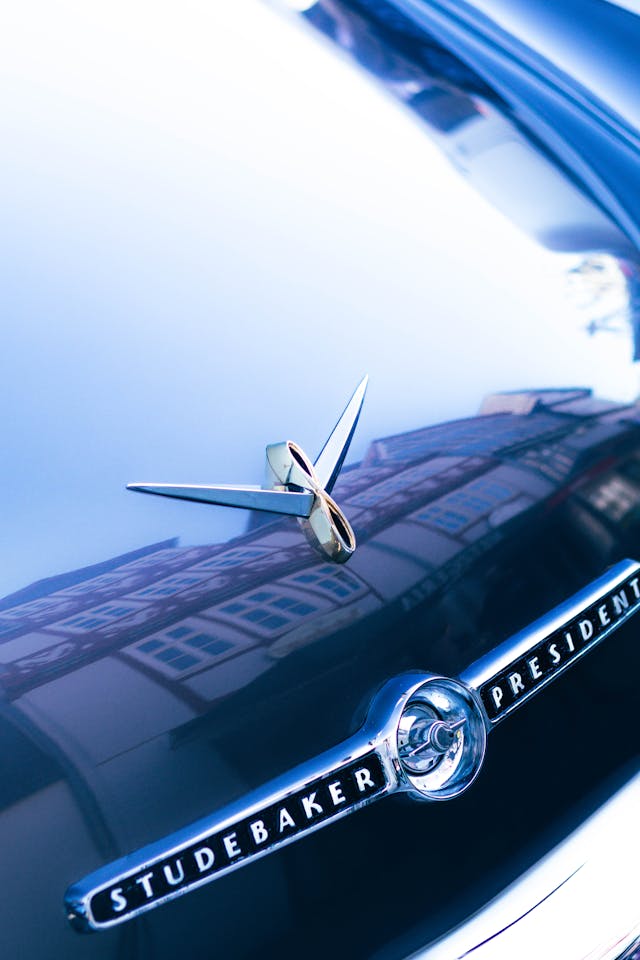
The Big Three’s Grip on the Market
From the 1930s through the 1960s, the Big Three controlled the vast majority of the U.S. automotive market. They had powerful dealer networks, large advertising budgets, and the capability to mass-produce vehicles at lower costs due to economies of scale. Companies like General Motors offered cars in every price range, Ford was a pioneer in streamlined production, and Chrysler provided a balance of performance and affordability.
Competing against these giants was a daunting challenge for smaller independent automakers like Studebaker, Packard, Nash, and Hudson. Yet Studebaker distinguished itself as one of the longest-lasting of the independents, remaining a notable name in the industry for decades.
Studebaker’s Advantage: A Legacy of Innovation
Despite its smaller size, Studebaker earned a reputation for innovation. As early as the 1930s, the company introduced aerodynamic styling, fuel-efficient engines, and forward-thinking engineering. Studebaker designers didn’t feel constrained by tradition and often pushed boundaries to create cars that were visually distinctive and mechanically forward-looking.
Some key innovations included:
- Early adoption of aerodynamic “streamlined” designs in the 1930s
- Introduction of modern car concepts like the 1939 Champion, marketed for fuel efficiency
- Wide windshields, curved glass, and futuristic body styling
- A willingness to experiment with fiberglass (as later seen in the Avanti)
Studebaker’s creative approach helped it gain attention in a market where the Big Three often relied on incremental updates.
The Post-War Boom: A Time to Shine
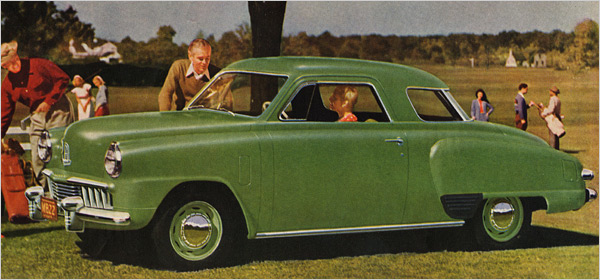
After World War II, American consumers were hungry for modern automobiles. While many automakers simply refreshed their pre-war models, Studebaker introduced completely new postwar designs in 1947. With its slogan, “First by far with a postwar car,” Studebaker captured national attention.
The sleek bullet-nose design of the 1950 and 1951 models stood out from anything offered by Ford or Chevrolet. Studebaker’s cars were instantly recognizable on the road and offered a level of stylistic flair that attracted buyers looking for something unique.
Lean Manufacturing as a Necessity
Because Studebaker lacked the vast production resources of the Big Three, it had to manufacture vehicles efficiently. Instead of competing directly in every market segment, Studebaker focused on niche areas where it could excel.
Some strategic decisions included:
- Emphasizing smaller, more affordable models such as the Champion and later the Lark
- Producing cars with excellent fuel economy during times of economic concern
- Offering models with sporty styling to attract younger drivers
- Using existing platforms creatively to reduce production costs
By making the most of what it had, Studebaker often punched above its weight in the marketplace.
Competing Through Style and Personality
Where the Big Three often offered cars that were predictable and mass-market friendly, Studebaker leaned into style, personality, and innovation. Cars like the 1953 Starliner coupe were celebrated for their sleek and elegant design, praised by critics as one of the most beautiful car bodies of the era.
The company worked with world-renowned designers like Raymond Loewy, who helped shape Studebaker’s identity as a bold, forward-thinking brand. This focus on unique styling became a major differentiator from the more conservative designs of Ford and Chevrolet.
Marketing the Studebaker Difference
Studebaker’s advertising campaigns often focused on individuality. Rather than encouraging buyers to follow trends set by the Big Three, Studebaker promoted a sense of uniqueness and freedom.
Taglines like “Different by Design” and “Always Give More Than You Promise” positioned the brand as innovative and consumer-focused. The company marketed to customers who wanted to stand apart from the crowd.
Economic Challenges and the Fight to Survive
Despite its creative successes, Studebaker faced growing financial pressures during the 1950s. The Big Three could afford to reduce prices to crush competition, while Studebaker’s higher production costs made price wars difficult to withstand.
In an effort to stabilize, Studebaker merged with Packard in 1954 to create the Studebaker-Packard Corporation. The merger aimed to combine resources and improve competitiveness, but financial difficulties continued.
Studebaker fought back by introducing the compact Lark in 1959. The Lark was a success, briefly helping the company regain market share before competition from Ford’s Falcon and Chevrolet’s Corvair eroded its advantage.
The Final Bold Stand: The Avanti
Studebaker’s last major attempt to challenge the Big Three came with the 1963 Avanti—a futuristic, fiberglass-bodied sports coupe designed to reignite consumer excitement. The Avanti was fast, safe, and incredibly modern, proving once again that Studebaker could innovate at a high level.
Although critically acclaimed, production delays hindered its commercial success. The company eventually ceased U.S. manufacturing in 1963 and ended production entirely by 1966.
Legacy of the Underdog
Studebaker may not have survived the dominance of Detroit’s automotive powerhouses, but it left a profound legacy. It proved that creativity, innovation, and individuality could go head-to-head with corporate giants. The company’s cars, especially those from the 1940s through the early 1960s, continue to be celebrated by collectors and enthusiasts for their bold designs and pioneering spirit.
Studebaker’s battle against the Big Three was a story of daring innovation in a market ruled by industry titans. Though smaller in size, Studebaker competed by being different—offering futuristic styling, fuel-efficient models, and charismatic vehicles that captured the imagination of drivers seeking originality. In the golden era of Detroit, Studebaker stood as a proud underdog whose legacy continues to inspire automotive history enthusiasts today.