The Studebaker Avanti is more than just a classic car—it represents a final bold push by Studebaker to redefine innovation in the American automobile industry. Introduced in 1962 for the 1963 model year, the Avanti quickly became known for its futuristic styling, impressive performance, and advanced safety features. Although it arrived during the twilight years of the Studebaker company, the Avanti left a lasting legacy, influencing automotive design long after production ceased. This is the story of a car truly ahead of its time.
A Vision for Revival: The Birth of the Avanti
By the early 1960s, Studebaker was struggling to compete against larger automobile manufacturers like Ford, GM, and Chrysler. The company needed a dramatic, attention-grabbing model to reignite public interest and boost sales. Studebaker President Sherwood Egbert believed that a daring, modern sports car could reposition the company in the marketplace.
In 1961, Egbert enlisted legendary industrial designer Raymond Loewy, known for his streamlined designs and previous work with Studebaker, to create a revolutionary new vehicle. Loewy and a small design team worked intensively in a rented house in Palm Springs, completing the concept in just 40 days.
A Radical Design That Broke All the Rules
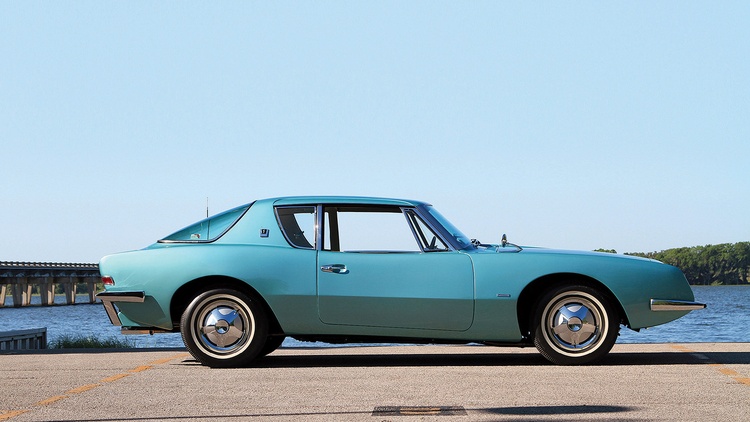
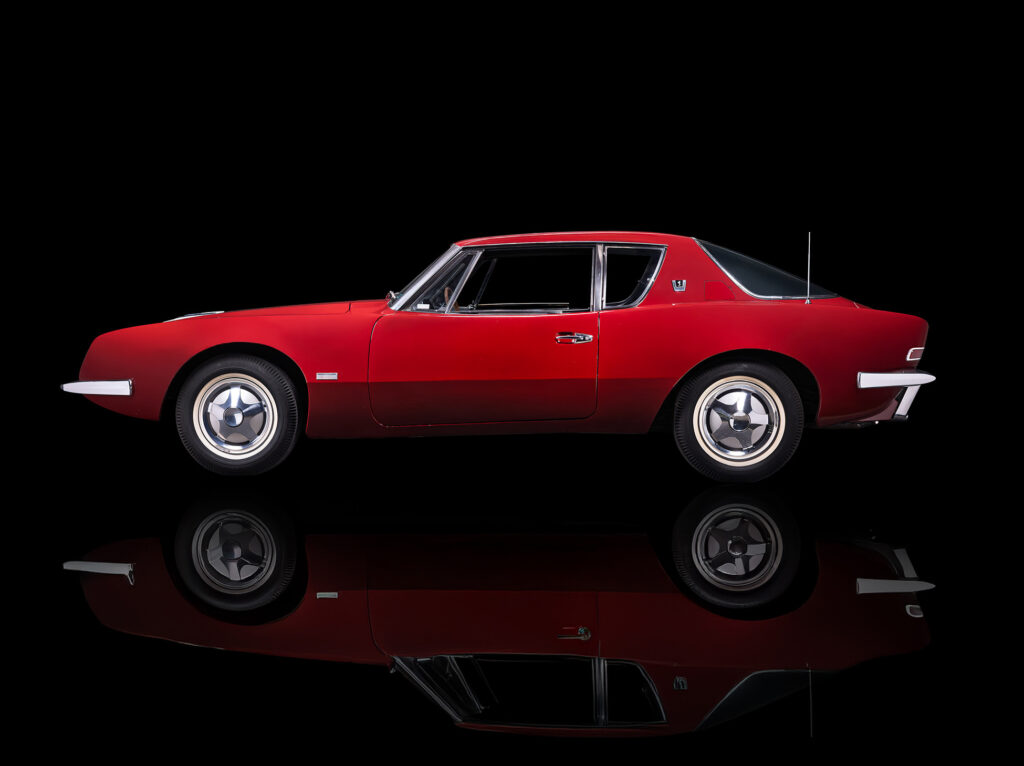
When the Avanti debuted at the New York International Auto Show in April 1962, it stunned audiences with its distinctive appearance. Unlike typical American cars of the era, the Avanti featured:
- A smooth, fiberglass body without a traditional grille
- A low-slung, aerodynamic front end
- A “Coke-bottle” profile with flowing lines
- Large, curved rear glass for greater visibility
- Recessed headlamps set into sleek front fenders
The absence of a front grille was particularly radical. Air was instead drawn in from an opening beneath the front bumper, giving the car a clean, futuristic appearance unmatched by other domestic models at the time.
Performance to Match the Style
The Avanti wasn’t just designed to look fast—it was built for performance. Powered by Studebaker’s 289-cubic-inch V8 engine, the Avanti offered multiple configurations, including supercharged versions under the R2 and R3 performance designations.
Key performance highlights included:
- Standard 289 V8 producing approximately 240 horsepower
- Optional Paxton supercharged R2 engine delivering around 290 horsepower
- Rare R3 engine capable of over 335 horsepower
- 0-60 mph in under 8 seconds (R2 model), impressive for the era
- Top speeds exceeding 120 mph, making it one of the fastest American production cars at the time
The Avanti even set numerous speed records at the Bonneville Salt Flats, further cementing its reputation as a serious performance machine.
Safety Innovation Ahead of Its Time
Long before safety became a standard selling point in the automotive industry, the Avanti incorporated numerous advanced features designed to protect passengers. These included:
- A built-in roll bar integrated into the roof structure
- Padded interior surfaces
- Recessed steering wheel hub
- Front disc brakes as standard equipment—the first American production car to offer them
The Avanti proved that speed and safety could coexist, making it a forward-thinking model in more ways than one.
A Fiberglass Marvel: Breaking from Tradition
The decision to produce the Avanti’s body using fiberglass rather than steel allowed Studebaker to create complex curves and lightweight components without expensive tooling. This technique had been used successfully by Chevrolet with the Corvette, but Studebaker brought a more refined, luxury-oriented approach to fiberglass construction.
However, fiberglass production challenges led to manufacturing delays, which ultimately hurt sales momentum. Demand was strong, but slow production meant the company couldn’t meet orders in time.
Critical Acclaim vs. Commercial Reality
The Avanti fascinated automotive journalists and enthusiasts alike. Critics praised its design, handling, and engineering innovations. Despite this, production numbers were limited due to corporate struggles and manufacturing delays. Only about 4,600 Avantis were built in 1963 and 1964 before Studebaker closed its South Bend plant in December 1963.
Although Studebaker continued limited production in Canada for a short time, the Avanti marked the final major new model introduced under the original Studebaker brand.
The Avanti Lives On
The story didn’t end with Studebaker’s closure. In 1965, South Bend Studebaker dealers Nate Altman and Leo Newman purchased the rights, tooling, and factory space to continue producing the Avanti under the name “Avanti II.” These cars were hand-built using Studebaker frames paired with Chevrolet Corvette engines.
Over the subsequent decades, the Avanti II evolved and underwent several ownership changes, continuing production in various forms until the early 2000s. The car’s unique design and enduring popularity allowed it to live on far beyond the Studebaker brand itself.
A Lasting Legacy
The Avanti remains a symbol of Studebaker’s willingness to take risks and innovate. Its impact can still be seen in modern car design, especially in the use of fiberglass bodies, integrated safety features, and sleek aerodynamic styling. Collectors prize the original Studebaker-produced models, particularly the supercharged versions.
Today, the Avanti is celebrated not only as a classic car but as a daring statement of vision during a pivotal moment in automotive history.
The Studebaker Avanti was more than just a stylish sports coupe—it was a bold attempt to reinvent a struggling company through innovation, performance, and futuristic design. Though its time under the Studebaker name was short-lived, its legacy has endured for decades. The Avanti proved that Studebaker could look far ahead of its time and create a car that still turns heads and sparks conversations today. It stands as one of the most iconic and influential automobiles ever produced by an independent American automaker.